 Thanks to a new service from Google Maps, there's now a widget on the right-hand sidebar giving our exact location. Click on 'view larger map' for the full map and then you can zoom in and out. The tabs to the right allow you to switch to Google Earth's helicopter view, and there's also a 'hybrid' option.
Friday, August 31, 2007
Where We Are
Thanks to a new service from Google Maps, there's now a widget on the right-hand sidebar giving our exact location. Click on 'view larger map' for the full map and then you can zoom in and out. The tabs to the right allow you to switch to Google Earth's helicopter view, and there's also a 'hybrid' option.


Saturday, August 25, 2007
Hopkins at Glasnevin
 One of the poets on the Leaving Certificate rota (last on in 2006 and sadly not with us this or next year) is Gerard Manley Hopkins. Irish connections include the annual Monasterevin summer school (he used to visit the Kildare village while teaching at the Catholic University in the 1880s); its website includes a searchable online archive.
He is buried in the Jesuit plot at Glasnevin Cemetery, which has excellent tours for schools and the general public. Pictured, our head of department John Fanagan at the memorial on a recent visit (Hopkins's name is on the top of the second tier).
Thursday, August 23, 2007
Book recommendation : The Fall
 Simon Mawer is a versatile English novelist who lives in
The Fall was published in 2003. The title combines two of the book's concerns: mountaineering and the loss of innocence. Mawer writes evocatively about climbing, particularly in
Wednesday, August 15, 2007
Leaving Cert results 2007
Congratulations to all our pupils who have today received another outstanding set of Leaving Certificate results. The overall points average of 441 across all subjects has gone up slightly from last year's phenomenal 440.
In English,
In English,
- 94% of our pupils took the exam at Higher Level ; nationally, 64% do.
- 20% of Columbans got 'A' (nationally the figure is 6.6%)
- 33% got 'B' (nationally 18.2%)
- 29% got 'C' (nationally 24.2%)
Sunday, July 29, 2007
MyLife5
Five SCC pupils who are about to start on their final year are currently in South Africa building homes for street children under the MylifE banner, and are currently blogging their experiences here. Good luck to Alex Browne, Lewis Mathews, Dave Murphy, Max Shirley and Ed Wilson in this demanding and exciting venture.
Saturday, July 21, 2007
Cheating at Canasta
 Our most distinguished Old Columban author, William Trevor, has just published his 11th book of short stories, Cheating at Canasta. In The Times, Neil Mukherjee writes that :-
True to such maturity and control, the stories are suffused with radiant and effortless majesty; a comprehensive ease of speaking about spaces in the human heart and mind that remains out of reach for most writers (continued here).

In the Literary Review, Cressida Connolly says :-
William Trevor does not flinch from horror and darkness, yet nor does he sensationalise these things. Evil may be inadvertent, or clumsy: it is never elegant or just; or even, of itself, very interesting. Its purpose, in his stories, is to test the moral limits of his characters. What is of interest to him is not the crimes themselves but the way in which they affect, change and damage people. He gives no easy answers. Redemption is not the point; a sort of desperate, unspoken atonement is more likely. Only love is noble, but it lacks the power to save a life. A husband plays cards with his wife, who is in a home, with Alzheimer's: tenderly, he cheats in order to let her win; it is her one remaining pleasure (here).
Thursday, July 12, 2007
Yeats Book Crossing
 We've previously strongly recommended the outstanding semi-permanent Yeats exhibition at the National Library in Kildare Street. In the words of the website :-
250 anthologies of poetry by WB Yeats were set free in Dublin on Monday, July 9th, 2007, for free public enjoyment by the National Library of Ireland. The books which were left on trains, buses, cafés, pubs, hotels and public spaces throughout the city were distinctively labelled with an invitation to savour the work of the great poet and a request to leave the book in another public place for someone else to enjoy.
Yeats Book Crossing was inspired by the concept of Book Crossing in other countries. It is hoped that the books, which have been specially purchased by the Library for this book crossing initiative, will be enjoyed by people of all ages, will promote a greater engagement with the poetry of WB Yeats and will lead to visits to the Library’s award winning exhibition Yeats: the life and works of William Butler Yeats.
Each of the books is marked with a unique code. Readers can report a sighting and log their comments here on the National Library’s website. This log will in turn become a record of the journey of each of the 250 books as they wander through public spaces in Ireland and abroad.
Tuesday, July 03, 2007
A Long Long Way
 A book recommendation : Sebastian Barry's A Long Long Way has been shortlisted for several awards, including the recent IMPAC prize won by Per Petterson and the Man Booker Prize, and this year was chosen for Dublin's One City, One Book scheme.
The field of First World War fiction is by now very swollen, and any writer needs to bring something fresh to it. Barry's book is written through the perspective of his innocent and helpless protagonist, Willie Dunne, a working-class Irish volunteer, and does indeed recapture a powerful sense of horror. Two incidents - a hallucinatory first sight of a mustard gas attack, and Dunne's brief involvement in the Easter Rising - encapsulate the young soldier's bewilderment particularly strongly.
The book was reviewed by Laura Barber in the Observer, there is a useful Penguin study guide with an interview here, and Three Monkeys Online has another interview with the author here, in which he says :-
There have been so many books about other nations at the war, the English in the main obviously. But in Ireland I suspect the matter of the war became merely impersonal, after so long a silence, people not suspecting it had anything to do with them, especially as it hardly registers in any of our school history books. If it was forgotten for real reasons, both good and bad, it became forgotten for no reason at all. But it has been extraordinary to me the numbers of people at readings and in letters that suddenly realise they have this strong connection, and remember they had great uncles or whatever at the war, and are suddenly appalled by what they went through, and, in many cases, suddenly proud, suddenly amazed, suddenly thankful, which is wonderful. The forgetfulness was born out of self censorship perhaps.
JMG
Thursday, June 21, 2007
End of the Year
 And so we come to the end of our first blogging year. Term ends tomorrow, and there will be occasional posts over the next couple of months, but regular posting resumes in September.
This is the 191st post, and over the past academic year we have featured work by 25% of the pupils in the school, and many staff, including
- lots of poetry,
- over 50 book recommendations by pupils and staff,
- Transition Year essays and stories,
- reviews of theatre productions and drama within the school and in Dublin,
- essays, stories, articles and interviews by pupils,
- useful web recommendations (see the right-hand sidebar, starting with Shakespeare),
- news of major College events, such as Twelfth Night and The Hypochondriac,
- and lots more.
Meanwhile, it's off to the - at least metaphorical - beach. Happy Holidays.

Tuesday, June 19, 2007
A Descriptive Tour
 II formers recently wrote pieces on places within the school grounds, a portfolio that adds up to a kind of descriptive tour of the campus. Here, we post six examples of vividly recreated places.
Olivia Plunket writes about 'My Escape', a tree :-
I pick up my book and pen, open the door, and begin the journey to my favourite place. I walk along the stony path and then onto the grass, and past an oak tree. Then I see it, the sycamore tree, surrounded by grass, with leaves that come in thousands. It has vines that cling on to it as if it is all that they have. The branches seem to never stop growing and new ones are forever appearing.
This tree has seen many things in its life. It has many memories and if it could speak it could tell many stories, for I'm not the only person who lies beneath it. I've never climbed it for I do not want to disturb the nature that lives in it. When I reach it the smell of freshly cut grass surrounds me with the warmth of summer. I listen to my music when I'm there, but I can still hear the soft singing of the birds in the background.
Continued ...
And also,
- Robbie Hollis writes about My Desk,
- Amelia Shirley about My Hill,
- Harry Brooke about his 'Signature Tree',
- Stephanie Brann about The Astroturf,
- and Jack Armstrong about The Tibradden Radiator.
Monday, June 18, 2007
The Millar Report - final edition
 The Actiontrack Show on Saturday night was called "It's in the Bag" and featured a strange story about a critical tea shortage in a very odd kingdom. The final report from Joey Millar (who at one stage played an ER doctor dealing with the side-effects of the crisis):- The big day arrived, and after a somewhat stumbled-through dress rehearsal, the audience began slowly entering the BSR. Nerves were high, as lines were hurriedly looked over, and dance moves remembered. However the minute the first notes of the awe-inspiring "I Like
 Tea 'Cause I'm British" were sung, the nerves promptly sunk away, leaving raw excitement. The performance itself was a bit of a blur for the performers. It was a mixture of remembering one's lines, dancing the right dance, and noticing the 200+ teenagers watching your every move. While some lines were forgotten, and dance moves mixed up (guilty as charged here...), I think the majority of the
 team were just pleased to get it over and done with, and as the applause died away, ecstatic at the realisation that we were on our Summer Holidays. Thanks to the ActionTrack team, and Dr Stone and Mr Girdham.
Sunday, June 17, 2007
Review of 'The Crucible'
 Two weeks ago our V form went to the current Abbey Theatre production of Arthur Miller's play The Crucible. Here are Tarka Russell's impressions, describing in particular what struck her after previously studying the play in depth in class as the single text in next year's Leaving Certificate exam.
She writes : In studying the text we had already gained a great knowledge of the background and main themes but to have actually seen the play as a production changed my view towards the play completely. There was a lot more emphasis on the main themes; religion, hysteria, power and also sexual motive. We were given an insight into a theocracy and saw a working example of the Puritan way of life.
Read the complete review here.
Saturday, June 16, 2007
The Millar Report 3
Tonight is the Actiontrack Showbuild performance in the BSR. 21 Transition Year pupils have been working non-stop day and evening preparing their show. Joey Millar reports on yesterday's work:
With just one day to go before the actual play, the BSR was a beehive of activity today. People were hurriedly learning their lines, putting the finishing touches to the series of props, or helping with the staging. The evening featured the first public performances of many of the singers, and was a nervy time for all. Despite the nerves, each singer lived up to his or her expectations. As we went through our old dances, and began our new ones, it became clear that this would not be just a play, but also a showpiece of song and dance. While the nerves are building, so is our anticipation. See you tomorrow.
With just one day to go before the actual play, the BSR was a beehive of activity today. People were hurriedly learning their lines, putting the finishing touches to the series of props, or helping with the staging. The evening featured the first public performances of many of the singers, and was a nervy time for all. Despite the nerves, each singer lived up to his or her expectations. As we went through our old dances, and began our new ones, it became clear that this would not be just a play, but also a showpiece of song and dance. While the nerves are building, so is our anticipation. See you tomorrow.
Friday, June 15, 2007
The Millar Report 2
Joey Millar continues his account of the Actiontrack week (performance tomorrow night) :-
ActionTrack Day 2
Today, we had the challenging job of mixing the many, many stories we had created yesterday, into one giant, play-friendly tale. We spent a large period of time brainstorming. Stories and ideas were thought up, mixed around, and often completely inverted. The future plan could go either way, we still aren't sure in which direction our play is headed. At the stage, we are in as much confusion as you are!
Another aspect of today's work was the creation of seven wonder-hit songs. We completed, and improved the songs we had started yesterday, and, come evening, we had lyrics, and indeed dance moves to many of our songs.
See you soon.
Day 3
The very look of our play made considerable progress, as we decided upon the set design, and costumes today. Today was also the day that we finally completed the storyline and decided on who would play which part. While I won't go into specifics (it would ruin the surprise!), I will reluctantly leak this - you will never see the common cup of tea in the same way...
After three days' constant acting, you will have to forgive me if I sign off here. I have to get my much-needed beauty sleep, and now that I think of it, a cup of tea wouldn't be bad either...
JM
Out Stealing Horses
 Yesterday the Norwegian novelist Per Petterson's book Out Stealing Horses won the International IMPAC Dublin Literary Award, worth €100,000 (it also won the Independent Foreign Fiction Prize in 2006), and it is highly recommended here, too. It is already selling well in paperback, is a deserved winner and should be highly popular.
It tells the story of Trond, in his late 60s, thinking back to his childhood from his new home in the isolated Norwegian countryside, starting :-
Early November. It's nine o'clock. The titmice are banging against the window. Sometimes they fly dizzily off after the impact, other times they fall and lie struggling in the snow until they can take off again. I don't know what they want that I have. I look out the window at the forest. There is a reddish light over the trees by the lake.

What follows is an atmospheric, evocative and moving novel about memory, pain, childhood, parenthood and loneliness. It is perfectly translated by Anne Born, who shares the prize. 'Scandinavian' fiction has recently been successful elsewhere in Europe, and, although this is set in a different country, this book may remind some readers of Henning Mankell's fine crime fiction.
JMG
Thursday, June 14, 2007
Jennifer Johnston interview
 Recently V former Sophie Haslett interviewed the novelist Jennifer Johnston about her life and work. In particular, she questioned her on one of the novels on the comparative module of the Leaving Certificate course, How Many Miles to Babylon? Our recently-finished LC candidates studied the book this year, and it is also being studied by next year's candidates. Sophie's interview is wide-ranging, and also covers other work such as Shadows on our Skin, Johnston's background, and her general approach to starting a novel.
Among the questions and answers :-
SH : "Is there a theme or a strand running through all of your novels?"
JJ : "Ireland is the main theme, and Irish women and their plight if you like to call it. The mess that all make of our lives too, because I don’t know anybody who hasn’t made a mess of their lives one way or another. Human relationships is another and the relationships between the very old and the very young has always fascinated me. Then there are all the normal themes like love, violence and death. Another common one is the impossibility of so many things that we’re told as children that we can do. But Ireland is the main one. I’m very attached to it, it’s my home."
This interview (click here) is recommended for our V form in particular, as well as Johnston's essay on the SLSS website here.
Wednesday, June 13, 2007
Poem of the Week : 'Windwheels'
Our last Poem of the Week in this academic year is our first by one of our own pupils, Benjamin Russell, winner of this year's Senior Poetry Prize.
Windwheels
Winding our way through terraced wine groves and cork-trees,
a fleeting glimpse of this other form of life
from behind protective glass of course.
Gazing down on the rows of yellow flecked scrub
baking
and to our right, white-capped hills:
each windmill like a toy set down by giant children
as they knelt to pick the wild flowers,
the meadows' sparkling teeth.
The Submarine
The latest edition of the excellent Library magazine, The Submarine, is out shortly, and can be seen online here.
Page One features Librarian Tom McConville's thoughts on the popularity of fantasy fiction -
"Riding dragons or broomsticks, breathing underwater, flying, changing shape and talking to animals are all things that were possible in our childhood imaginations, and reconnect us to childhood. Yet the quest aspect, as in all storytelling, symbolises life's reality: one leaves home (childhood and parents) to confront and conquer demons (inner and outer), finding one s place in the world (significance) and rescuing one's prince or princess along the way (love). Thus one achieves oneself, becoming a whole and unique adult, with the skills and independence necessary for the adult world. (In case this sounds patronising I might point out that many adults known to me personally are still on the way)."
Among the o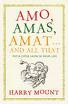 ther features are :-
Page One features Librarian Tom McConville's thoughts on the popularity of fantasy fiction -
"Riding dragons or broomsticks, breathing underwater, flying, changing shape and talking to animals are all things that were possible in our childhood imaginations, and reconnect us to childhood. Yet the quest aspect, as in all storytelling, symbolises life's reality: one leaves home (childhood and parents) to confront and conquer demons (inner and outer), finding one s place in the world (significance) and rescuing one's prince or princess along the way (love). Thus one achieves oneself, becoming a whole and unique adult, with the skills and independence necessary for the adult world. (In case this sounds patronising I might point out that many adults known to me personally are still on the way)."
Among the o
 ther features are :-
- A review by Rowland Cooper of Christopher Paolini's Eragon (the 'Book of the Year' in our World Book Day questionnaire).
- Several staff book recommendations (including Miss Kilfeather's recommendation of The Tortilla Curtain by T.C. Boyle)

- An article by Rebecca Feeney-Barry on this year's fund-raising for a school telescope (via the extraordinary 24-hour run organised by Mr Coldrick),
- An Irish cartoon by Poppy Vernon
- Three staff reviews : Mr Richard Brett's of Amo, Amas, Amat ('Put a Little Latin in your Life') by Harry Mount ("The fact that this book has risen so high in the bestseller list is at first sight surprising. Perhaps its subtitle How to become a Latin Lover tempted some inadequate purchasers on the Internet"); Dr Jeremy Stone's of the controversial Atlas of Creation; and by
 Dr Garry Bannister of Greg Mortensen's Three Cups of Tea,
- Robert Murtagh's obituary of Old Columban Michael Yeats,
- The poem 'Windwheels' by Ben Russell (see today's other post),
- David Cooper's review of Joseph O'Connor's novel Star of the Sea.


Subscribe to:
Posts (Atom)